
How much sleep do I need for my condition?
Six Pillars
Sleep does more than help you feel rested. It plays an important role in your metabolism, mood, energy, and overall health. Improving the quality and consistency of your sleep can make a meaningful difference, and your clinician can help if sleep problems are getting in the way.

Restorative sleep means getting enough consistent, high-quality sleep to allow your body and brain to recover. This includes sleep duration, sleep quality, and regular sleep patterns.
Sleep affects:

Myth
You can catch up on lost sleep over the weekend.
What’s true instead
While extra sleep can help you feel more rested, it doesn’t fully reverse the effects of ongoing sleep deprivation. Consistent, high-quality sleep is one of the most important foundations for long-term health.
Myth
You can function well on very little sleep.
What’s true instead
Chronic sleep restriction affects metabolism, brain function, and long-term health—even if you feel “used to it.”
Set a consistent sleep and wake time, even on weekends
Reduce screen exposure 30 minutes before bed
Create a simple, 10-15-minute bedtime routine
Keep your bedroom cool, dark, and quiet for sleep
How much sleep do I need for my condition?
Could a sleep disorder be affecting me?
What changes would improve my sleep most?
Should I be evaluated for sleep apnea or insomnia?
How will better sleep impact my treatment plan?

Practical information about creating routines and conditions that support healthier, more restorative sleep.
Best for: People who want to improve sleep quality, consistency, or daily sleep habits.
Use with your clinician: Bring questions like, “Which changes to my sleep routine should I try first, and could a health condition or medication be affecting my sleep?” to your next visit.
Important: Healthy sleep habits can help, but ongoing sleep problems may require evaluation for an underlying medical or sleep disorder.

A quick introduction to how consistent, restorative sleep supports physical health, mental well-being, and daily functioning.
Best for: People who want to understand why sleep matters and identify ways to improve their sleep habits.
Use with your clinician: Bring questions like, “Could my sleep patterns or symptoms be affecting my health?” to your next visit.
Important: Persistent insomnia, loud snoring, gasping during sleep, morning headaches, or excessive daytime sleepiness should be discussed with a healthcare professional.

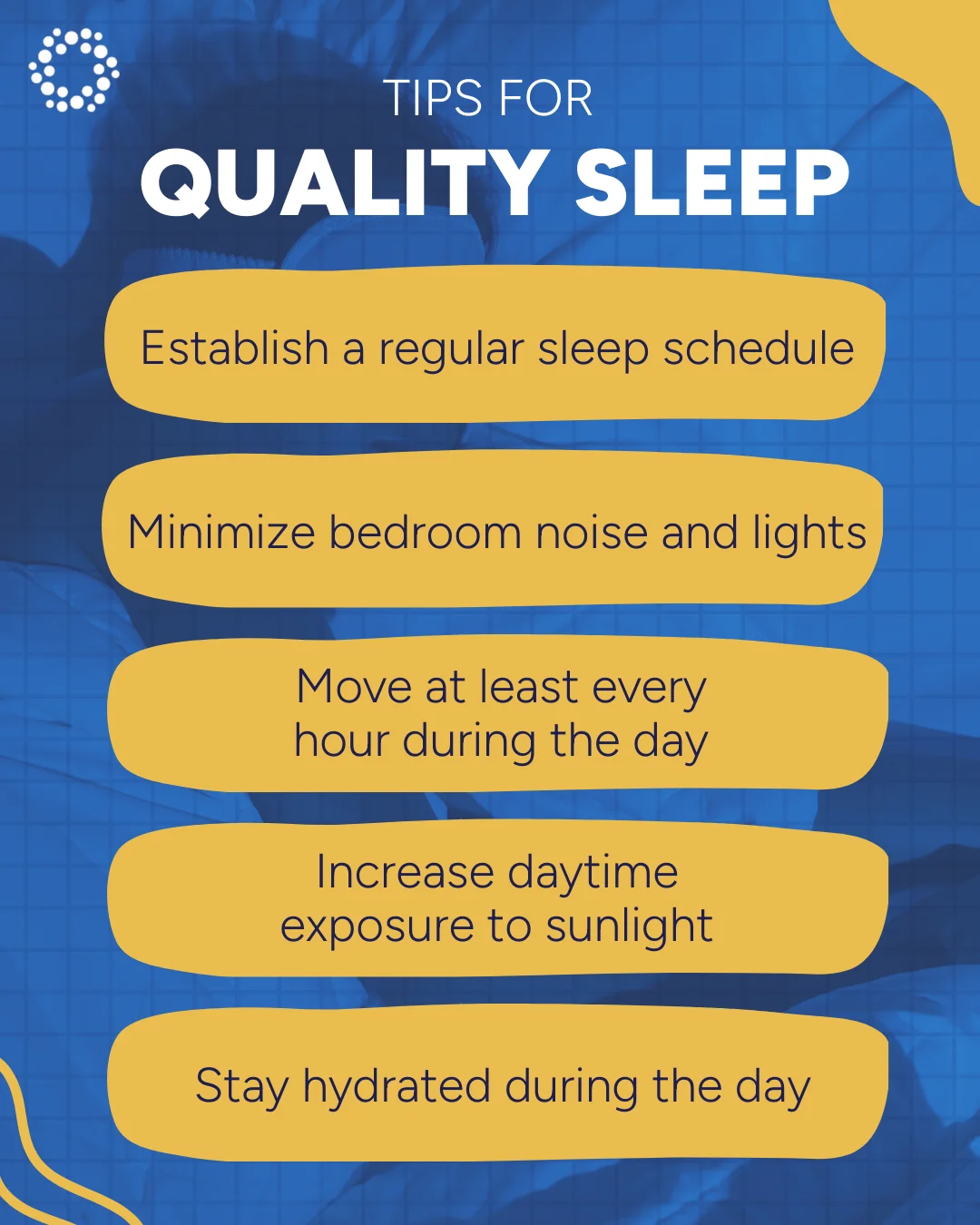
An easy-to-use visual guide with everyday strategies for supporting better sleep.
Best for: People who want a quick reminder of simple habits that can make healthy sleep easier.
Use with your clinician: Bring questions like, “Which of these sleep tips would be most useful for my symptoms and routine?” to your next visit.
Important: Sleep tips are a starting point, not a substitute for care when sleep problems are persistent, severe, or affecting daily life.