
How is stress affecting my current health condition?
Six Pillars
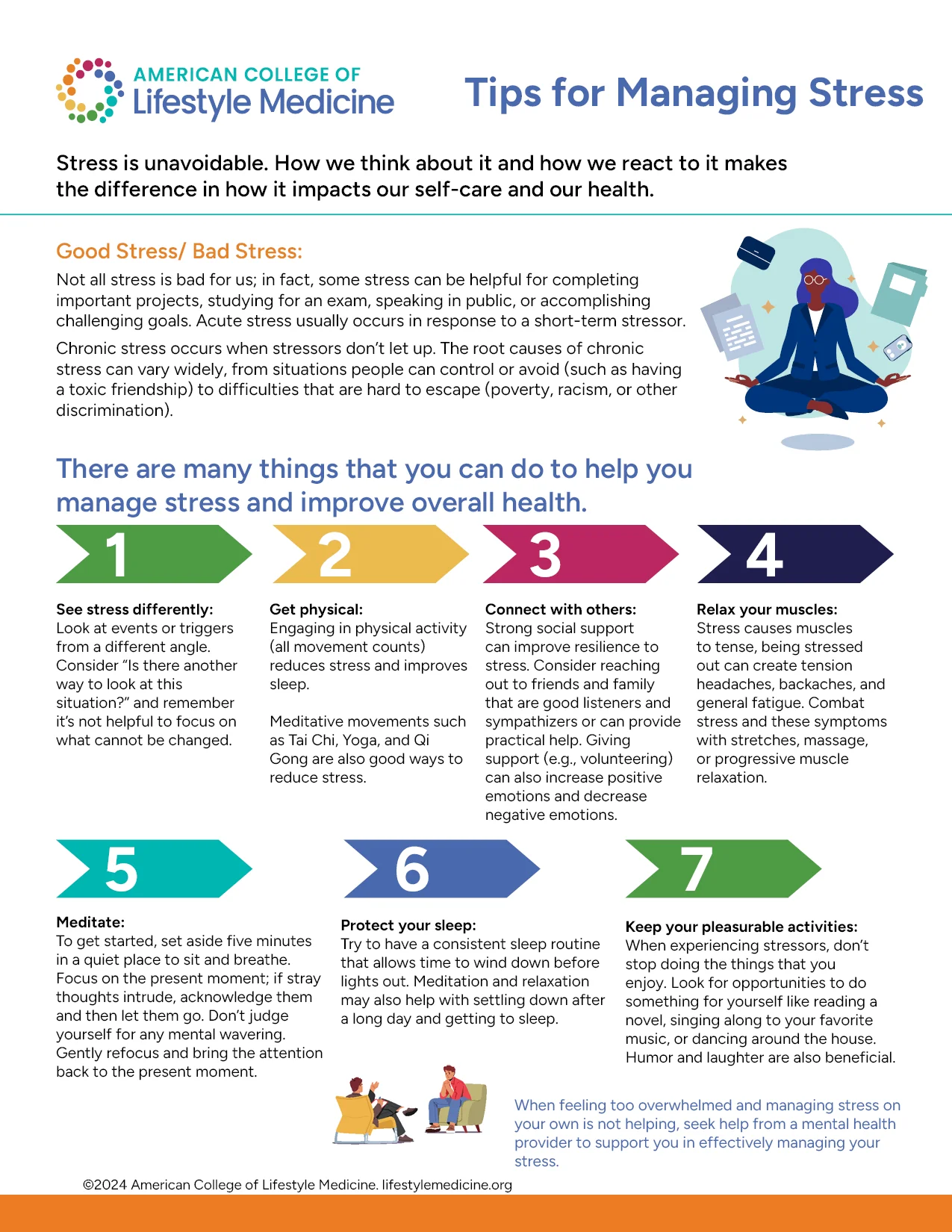
Stress affects more than how you feel. It can affect your sleep, energy, physical health, and overall well-being. Lifestyle medicine includes practical tools to help you manage stress, build resilience, and recover, with support from your clinician or care team when you need it.

Stress management in lifestyle medicine focuses on techniques that help regulate your nervous system. This can include breathing exercises, mindfulness, cognitive tools, and structured relaxation practices.
Stress can affect:

Myth
Reducing stress means eliminating everything stressful from your life.
What’s true instead
Stress is a normal part of life. The goal is not to eliminate stress, but to build skills and habits that improve resilience, recovery, and your ability to respond to challenges in healthier ways.
Myth
Being stressed all the time means you’re weak or not coping well.
What’s true instead
Stress is a normal biological response, not a personal failure. Chronic stress can affect anyone, and building healthy ways to recover and recharge can improve both mental and physical health.
Try a 2-minute slow breathing exercise once per day
Identify one common stress trigger and write down your response
Schedule one short daily “reset” moment, even 5 minutes
Reach out to someone you trust when stress starts to build
How is stress affecting my current health condition?
What stress management approach would fit my life?
Should I consider behavioral health support or coaching?
How can stress reduction work with my other lifestyle changes?
What signs show my stress is improving?

Age-appropriate guidance to help children recognize stress, express their feelings, and develop healthy coping skills.
Best for: Parents, caregivers, educators, and families supporting children through stressful experiences.
Use with your clinician: Bring questions like, “Are my child’s behaviors possible signs of stress, and how can I support them at home?” to your next visit.
Important: Seek professional help when a child’s distress is persistent, worsening, affecting daily life, or accompanied by concerns about safety.

A quick introduction to how stress affects health and how healthy coping strategies can build resilience.
Best for: People who want to understand their stress response and begin managing stress more effectively.
Use with your clinician: Bring questions like, “How might stress be affecting my health, and which coping strategies should I try?” to your next visit.
Important: Stress is a normal part of life, but persistent or overwhelming stress deserves attention and support.

Practical strategies for responding to stress and supporting greater calm, balance, and resilience.
Best for: People who want simple tools they can use when everyday stress begins to build.
Use with your clinician: Bring questions like, “Which stress-management techniques may work best for my symptoms and circumstances?” to your next visit.
Important: No single strategy works for everyone. If stress is interfering with sleep, health, relationships, work, or daily functioning, talk with a qualified professional.